
Tag Archives: Musikgarten

The Value of the Parent in a Toddler Music Class

The time to start experiencing music is in early childhood; the place is in the family. Home is the first and most important school for children, and involved parents are the most effective teachers. Adults are learning how to interact effectively and easily with children through music, and families are growing together musically. This is good for children and good for families. (Musikgarten, Family Music for Toddlers, On a Trip, 2016)

When I teach a music class for toddlers I must acknowledge the elephant in the room.

elephant

Next to, or nearby, every toddler attending class is an adult. This adult could be a parent, a caregiver, an uncle or a grandparent, but what do they all have in common? They are no longer toddlers and therefore have completely different musical needs from a toddler. They may be agreeing to sit in a toddler class but does that mean they need to sing along, dance along and play along? Wouldn’t they rather grab their cell phone, find a corner and start Facebooking? What can you do to keep those parents from herding into a corner and starting a gossip circle?

News Flash! You are not only about to teach a toddler music class, but also teach music to adults. So let’s first address the question,

“Why do Musikgarten family toddler classes include a loving adult for each toddler in the room?”

  • The adult links you, the teacher, to their child. For instance, you will demonstrate a steady beat by bouncing your stuffed animal and the adult will bounce their child the same way, instilling that steady beat.
  • The adults join in a community chorus of singing and participating that surrounds the toddler with hopes that one day s/he will feel comfortable joining.
  • The adult creates a space that becomes a safe zone for the toddler. Within that space the child feels most comfortable; in their comfort space they can best learn.
  • The adult makes logistics easier in the classroom. Imagine walking into a classroom filled with 12 roving toddlers and no adults. Bounce along? Maybe one at a time if you can catch one. Sing to them? They won’t sing back and will stare at you with a lost look. Sit in a circle? What’s a circle? Hand out sticks? Could be dangerous. Ask them to Walk and Stop? Good luck. Try pulling out that drum. Bam, oof, watch out!

Teachers agree: The parent is the channel through which you instill the heart and life of the Musikgarten program.

When the parent participates in class, the class is moving and grooving. When they sit back and watch or zone out your class is compromised. So your parents need to know this and you need to acknowledge their presence and worth. They already have a clue that music is wonderful and significant for their children. They have heard that music is part of a well-rounded education and it makes a significant difference in the lives of children.  Now the participating adults need to know they are the magic key to accessing the music education in your classroom. So what can we do as teachers to help the parents feel their value?

  1. Make sure you have spoken to every parent that plans to attend either on the phone or at a parent’s meeting. Besides reminding them about arriving on time, washing hands, and taking off shoes, they need to learn to enter the studio with excitement and anticipation, leaving the worries and cares outside the door, along with their cell phone.
  2. Before class begins, set the mood by having the CD for the program playing softly. So often I have parents walk in and begin to sing along with music. This is marvelous proof that they have been doing their homework and playing that recorded music often enough that they know the words.
  3. Room should be free of clutter and all toddler distractions put away. Remind the parents to leave all toys and food outside of the room. Stuffed animals that sneak in under a child’s arm gets invited to watch on my piano. Invite them to sit on your clean carpet or floor. Maybe have a drum or other classroom instrument to explore. Note: I keep that instrument with me at all times.
  4. Begin the class on time. I can’t emphasize this enough and tell the parents that we always begin on time. Note: I say this every week and also mention this at the end of class.
  5. Ask the parents to gather up their wandering children to form a close-knit circle.
  6. Quietly remind the parents that you are modeling all movement and they are expected to sing and move just like me. Mention this for many weeks – not just the first week! Note: I do not go into the discussion of “But I can’t sing” at this time.
  7. Sing the opening song quietly with a smile.
  8. Keep a slow tempo and make sure you have had eye contact with each parent and hopefully with each child.
  9. As the class progresses you will deal with individual needs and issues: roving toddlers, toddlers that need some quiet time in the waiting room, chatty parents, non-participating parents, etc.
  10. End on time, acknowledge the class, and invite them back for next week’s class.
  11. As parents leave, take care of any business. Note: I sometimes choose to call or email business related items later and keep the goodbyes pure.

As rapport grows, encourage parents to sing more and more in class. First encourage the ancient word, “la” and then urge the parents to eventually sing the words. Repeat a verse so that parents can sing along. Note: I make sure I drop out for a verse or sing quietly along, promoting their musical participation.

There are a few ways to communicate to parents between class and this is a great way to smooth out any miscommunications or to continue to educate parents about music class.

  1. A follow up phone call
  2. Through emails or handouts
  3. Indirectly through the encouraged use of the CD or downloaded music at home

By making the parent the most valuable asset, you are investing in your studio because these are the parent who will return next semester and the year after that.  Eventually you will have a base from which you can teach all that Musikgarten has to offer.

Make this your first step towards establishing your music studio.  You will reap the rewards of all your hard work.

Question:  What have you found to be the most effective way to guide your parents into joyful music making in your classroom?
What works and doesn’t work when marketing your Musikgarten classes?

What works and doesn’t work when marketing your Musikgarten classes?

I need to face a fundamental fact about myself. Although I have been teaching my classes for over twenty years, my weakest skill is marketing my program. Like most teachers, I love teaching, but shudder at the thought of putting myself and my studio out there. Often after dutifully sending out marketing material I throw up my hands and pray for three more students, just three more students.

Here is the good news and the bad news. You will become a better teacher over time and marketing doesn’t get easier.

So what works and what doesn’t work for my studio business? First let’s get the “doesn’t work” out of the way. Doing nothing or wringing my hands and hoping my classes fill up with registrations on their own doesn’t work.  I have learned that to market my classes I needed to step out of my studio and actually tell others about what I do and when I do it.

What has given me the best bang for my buck? Every area is different, but these three basic tactics have given me the largest overall return:

  1. Website: I use the website offered by Musikgarten through AW Technology (makingmusik.com).This service is easy to use, only $14.95 a month, has a modern look, and is mobile device friendly. This is the single most important marketing tool in my box.
  2. Word of Mouth: Creating relationship with my families is very important to me and research shows this will fill your classes more than any other tool. If parents like me and like what I offer there is a good chance they are going to tell their friends about my studio. I highly recommend listening to a podcast produced by Michael Hyatt called,”Do you Want to Wow your Customers”.  I found myself rethinking how I greet my clients as they enter my studio, and how I communicate to them through emails and on the phone.  This podcast has a lot of relevance to how we can grow your business by making it the most awesome music studio in your community.
  3. Brochures: Whether you use the brochures produced by Musikgarten for licensed teachers or create your own, brochures are very valuable. Having this valuable tool in your purse, bag, by your studio door or in your glove compartment is essential. One way I use a brochure is to introduce myself to teachers in local schools. This may sound like cold calling but you need to start somewhere. Most parents will ask their public school teachers for a good “piano teacher” who will teach their three year old. Guess who they will refer if they have your name in their contacts?

Other Tactics to Keep in Mind:

  1. Print ads in your local paper, magazines, or journals: As I mentioned earlier, every area is different. I personally have not had good luck with these, but that does not mean you should not consider or investigate these as an option in your area. Print ads can be expensive, but they may come with some combination of digital ads. You could also consider Musikgarten’s co-op advertising. If you have three or more teachers in your area, advertise together and Musikgarten will partner with you, evenly splitting the cost of the ad between all parties. Contact Bunny at bgodfrey@musikgarten.org for details.

Note: A lot of local papers have event sections for kids that you can be listed in for free. Submit a description, class times and contact info of your program in this section.

  1. Online parent sites: There are many of these sites to explore. It helps to ask families around town what they use to find their activities and that can be an eye opener. Do some research and choose what fits. Other online sites like Macaroni Kid may be an option for you in your community. Network and post on Facebook pages that cater to parents in your community.
  2. Flyers: I still run around town putting these up and I feel so good afterwards, but I will admit I know I do not get more than maybe one or two calls per year. Musikgarten has pre-made flyers that you can easily customize to your studio on the Teacher Extranet. If you want to create your own flyer, I recommend Canva.com. You can use the wonderful pictures and Musikgarten logo available to licensed Musikgarten teachers on the Teacher Extranet and create a professional looking flyer that tells parents what they need to know.
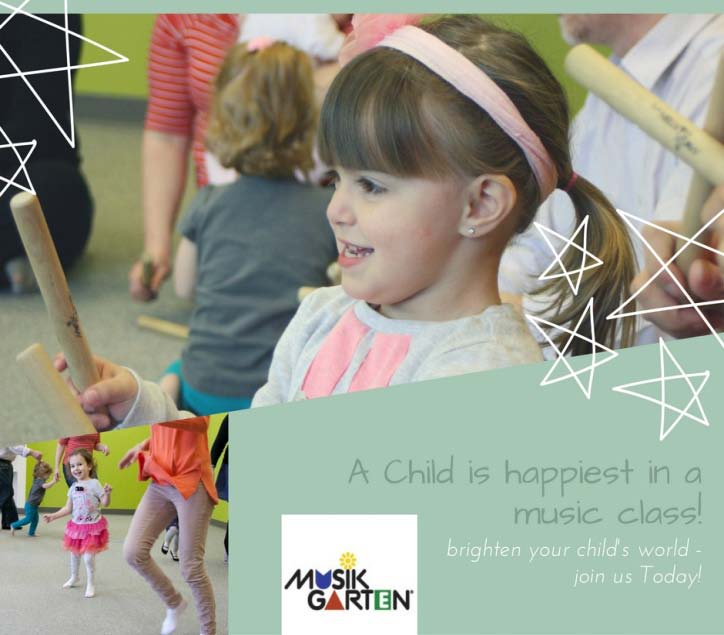
  3. Social Media: I do have a Facebook page for my business, but I follow many other Musikgarten studios that consistently update and advertise via Facebook and I have to admit that I suffer from Facebook envy. Check out The Music Garden, LLC. Keeping content updated is key. You can reference blog posts, promote your classes, share Musikgarten posts from their corporate page or from other sources, and create simple ads. Here is a sample of a quick ad I created for my Facebook page in less than 15 minutes; not perfect, but helps demonstrate what you can create in a small amount of time. An added bonus is that you can add a website link and email this to inquiries as a reminder to sign up for the fall, you can also post this to your Instagram and Twitter account and add it to a flyer with your contact information.

August2016adphoto (2)

  1. Demo Classes: As a veteran teacher I realize this was an important step early on, which brought me good exposure. I offered these classes in my studio and at my local libraries. It gave me a chance to practice my skills on the unsuspected. It also gave me a chance to hand out those nifty licensee brochures mentioned earlier.

For other ideas, check out this blog post from March 2015.

Please know it takes time and patience to bring families to your studio. Also remember that different communities require different combinations of tactics to reach your audience.

After you have chosen your tactics, how can you know which ones work best?  I have created an inquiry list that includes the question, “How did you hear about me”. Start collecting this data when the phone rings. This will give you the best barometer for the most effective tools in your marketing toolbox. Whatever tools you choose remember that you need to assess time and effort versus return.

Tell us how you have grown your Musikgarten studio!

The Teaching Triangle

As a young piano teacher, I was taught that the most successful recipe for learning to play the piano was to encourage the triangle of support from student to teacher, teacher to parent, and parent to student.  When any of these sides become weak, the process becomes more difficult for all.  Then reality set in. I faced a problem many piano teachers lament.  The parent would drop off their student, hopefully on time, and later pick up their student, hopefully on time, but their involvement ended there.  Even though the child received a weekly written homework assignment of what to practice at home, more than likely the only one benefitting from this paper was a hungry dog.  I was entertained with threats indirectly aimed at me as the exasperated parent would lecture the sullen child, “If you don’t practice the piano, I am not going to invest any more money for lessons”.   Unlike an orchestral triangle, my triangle was thudding, not dinging.

TriangleWeb version

Adding Musikgarten classes to my piano studio makes this triangle so much more fun to manage.  By bringing families into my studio to share music with me, I could now direct appropriate music making. Families receive a marvelous CD, or digital download, of music for them to sing and dance with all week. Ultimately I form a lasting relationship starting in my early childhood classes and moving through the program and beyond into my private piano program.

In a Musikgarten class, a community is sharing music and magic is in the air.  Below are some of the benefits from each perspective of the musical triangle:


Teacher:

  • Gets to know the whole family in the music class setting.
  • Becomes familiar and can work with their high/low and out of tune voices, and can adapt the program to work with the laid back family or the families that giggle and jiggle along.
  • Long term relationships are formed in a Musikgarten class and the triangle is strengthened. This musical relationship can go on for nine years in the Musikgarten curriculum and beyond in traditional lessons. When that student finally graduates from high school and adds music to their college course load all can shed tears of congratulations.
  • Gets to share something once to a group rather than 8 times to individual lessons. And the punch of the content is much more effective in the group.  No more telling a student who may or may not tell the parent.

Parent:

  • Receives firsthand experience of what is happening when their child is learning music.
  • Learns alongside their child and may even relearn what they were taught as a child.
  • Receives a quality recording and doesn’t have to entertain their child with solo performance of singing.
  • Know they have made a sound musical choice for their child that will go well beyond the early childhood years and gracefully bridge their children on to formal lessons.

And Students?

  • LOVE having their parents and siblings alongside as they share music.
  • Know they can share this music at home and the family will be familiar with the songs and dances.
  • Can dance, sing, and play musical instruments along with their friends.
  • Freely fall in love with their music teacher, can dream of learning to play an instrument and get to share music throughout their whole lives (although they don’t know about this surprise yet!)

Teacher-kids low resThere are so few experiences in our culture wherewe get to really know the teacher the way a Musikgarten class can provide this access.

If you are a teacher, I hope you add these ideas to your list of talking points. If you are a parent, I hope you will see the lifelong benefits of Musikgarten

And if you have, share the benefits you have enjoyed.

11 Reasons Kids Need Music More Than Ever!

Parents have lots of options when it comes to activities for their children. How’s a parent to choose between Baby Yoga and Toddler Soccer and Mommy & Me Cooking Classes – not to mention those other music-like programs? As a Musikgarten studio owner, it’s important to know what to say to a parent who is thinking about signing up for Musikgarten, but isn’t totally sold…yet.

So with that in mind, we’ve researched and compiled a list of 11 important ways children benefit from music education. Use this sound reasoning to help parents make the smart decision!

  1. It’s highly logical: music improves reasoning skills! Children who take music lessons are shown to have unique brain functions compared to children who do not receive music lessons. In general, children with music instruction tend to score higher in memory, reasoning and in writing, math, and science. Source: PBS.org
  1. All together now: music teaches coordination! Playing instruments and learning rhythmic movement develops dexterity and coordination between the ear, brain, and body. Enhanced coordination, fine, and gross motor skills can open a world of possibilities, not only in the arts, but in sports as well. Source: Parents.com

 Shoot3and4_Robert_IMG_6082

  1. Excuse me ma’am, music cultivates social skills! Music classes require interaction with both adults and peers, and classes help teach respect, direction following, impulse control, teamwork and “musical sportsmanship” – that is encouraging and supporting each other. Through music, a child learns how to respect others and collaborate within a group to accomplish a goal. Source: Parents.com
  1. From the top! Music teaches children to practice. While practice may not always make perfect, music teaches children how to practice and why it matters. Whether they’re learning to play an instrument or simply learning about music, the act of practicing teaches children about self-discipline, patience, perseverance, resilience, and how to reach both short- and longer-term goals. Source: Violinist.com
  1. Music boosts confidence and self-esteem! Learning about music and how to play an instrument takes work but the rewards are incredibly gratifying. A child’s confidence can be immediately boosted through understanding, reading, and performing. Even small achievements will boost a child’s self-esteem.
  1. Music is like “IQ food”! Studies show that children who were given music lessons over a year averaged three IQ points higher than other groups. And because music requires the use of both the right and left sides of the brain, it helps create new neural pathways and linkages that help improve overall brain function. Source: beautythroughimperfection.com

 Shoot3and4_Robert_IMG_6404

  1. Music teachers are many! We don’t have to tell you that music teachers are something really special! But when it comes to music, children also benefit from a whole world of mentors – from classical composers to popular musicians to experimental sound artists. Whatever a child’s preferences, there will always be an endless catalog of music and musicians available to inspire and teach them something new.
  1. Don’t forget! Music fosters short- and long-term memory! Each of us can still remember the first song we were asked to memorize as youngsters, or even the 16 bars we practiced for hours upon hours. Learning music stimulates the hippocampus in the brain, which in turn supports short- and long-term memory. Source: Psychologytoday.com
  1. Wait, what? Music can increase attentiveness and focus! The ability to pay attention—focus, listening, and staying on task—is deeply connected to academic performance. A research team at Stanford University found that music engages the areas of the brain involved with paying attention and focus, which can directly contribute to higher test scores in school. Source: med.stanford.edu; Oxford Journal
  1. ¡Fantastico! Music helps children learn other languages. Music training has been shown to physically develop that portion of the brain responsible for language development. A more developed language center allows for the mastery of a native language as well as foreign languages. Source: PBS.org
  1. Music is a trip! Because Musikgarten incorporates curricula, lessons and songs from other countries, children will learn about other cultures. Musikgarten won’t just open their minds; it’ll open up their worlds! With our uniquely global approach, children become curious about other cultures and may be inspired to follow an educational or career path that takes them to new and exciting places.

You know music matters, now you can help parents understand why music – and Musikgarten – are so much more important that they realize!

Mama Mia! 10 Ways To Manage Parents!

As a music teacher, you’re not just teaching children to play; sometimes you’re teaching parents to play nice! Some parents may be overly involved during class; some may not engage at all. Some parents will push their child too hard; others won’t practice a note after class. Some may have unrealistic expectations of you, the curriculum, or their child’s ability or progress. They may be critical of your teaching methods, the class schedule, or your payment policy. Bottom line – at some point in your Musikgarten teaching career you will come across an unpleased parent. But there are things you can do to prevent and smooth over issues before they get out of hand. After all, parents are your customers and you want to keep them coming back!

Here are a few smart ways to manage moms n’ dads, and keep your Musikgarten humming along in perfect harmony.

  1. Set Expectations Early! Discuss what is expected of parents, students, yourself and your staff. Provide written guidelines, a poster in your studio, or some type of expectations “contract.” Keep rules and consequences clear and concise. For example, how will you handle late payments? No payments? No-shows? Behavior issues? Iron it out now, before you’re put in a tough spot later.
  1. Communicate How To Communicate! Let parents know the best time(s) and preferred way(s) to contact you in person, via email and on the phone. Don’t feel obligated to give out your personal or cell phone number or to answer calls during dinner. If a parent wants your attention between busy back-to-back classes, let them know a better time to chat.
  1. Listen Up! Active listening is critical, especially if there’s a problem. Make eye contact, repeat what you’re hearing and ask for clarification where needed. Make sure you understand the issue before diving in with a solution. Even if a parent is voicing a complaint, wait until they finish to respond. The parent will feel respected and heard, they won’t feel the need to repeat it, and you’ll know the whole argument before you reply.
  1. No Time Like Now! Don’t let little things fester. Address a problem as soon as it arises and nip it in the bud. Encourage parents to voice their concerns promptly, too.

“One of the best tools in my tool box is a studio policy with very clear expectations for students and parents. I also try to keep the lines of communications open. I touch base with parents frequently through email, or one on one. That way we can nip problems in the bud before they become out of control. I have found that the majority of my families are respectful if you are clear about what you want.”  -Paulette Amory, Early Childhood Music School

  1. Do The Math. If you have a problem with one parent, address that parent one-on-one. If you’re having the same problem with many parents (e.g. lots of families in the habit of arriving late or lingering too long after class), then address it as a group or in an email as a “friendly reminder.”
  1. Focus On Facts, Not Feelings. Having a heated discussion? Keep personal feelings out of it. Focus on the facts (“Your payments are consistently late…”) and the impact of those (“So I am not able to pay my staff promptly.”) but not personal feelings (“I feel like you’re taking advantage of me!”). If the problem is with a child’s behavior, focus on the behavior and the impact of that behavior. Then involve mom and dad in the solution. For example, “I had to remind Parker to stop throwing instruments five times today. It’s disruptive to the rest of the class and I know it’s not fun for Parker. How can we work together to help him?”
  1. Follow Up, Fast! Document important conversations and solutions immediately in an email to the parent. Then, if the solution seems to be working, let the parent know and thank them so they know you’re paying attention. If the problem continues, you’ll have a handy record of your attempts to remedy – especially important in the case of payment or behavior issues.
  1. Be Consistent! Don’t play favorites or give preferential treatment such as discounts or allowing disruptive behavior to go unchecked. Even if close friends or family join your class, treat everyone equally.
  1. Anticipate Conflicts. Don’t be surprised – or take it personally – when a parent isn’t happy about something. As the saying goes, you can’t please 100% of the people, 100% of the time. All you can do is listen empathetically and respond with respect and professionalism. So be kind as kind to yourself as you are to your customers!
  1. Ask For Feedback. Once a quarter, ask parents to provide specific, constructive feedback about you and your studio either in the form of a free survey or email. This shows parents that you truly care about their opinions and gives them the opportunity to be heard.

Tell us teachers, how do you manage parents? Share your questions, thoughts, ideas, and advice with us here.

15 Free* Tools to Help Manage Your Musikgarten

There’s more to building a successful Musikgarten studio than just making beautiful music. You’re growing a business, too! Today, there are a host of online business tools and apps that can help you to more quickly, easily, and professionally manage your Musikgarten studio. These tools can help alleviate stress, grow your business and give you more time to do what you love – teach! We’ve researched and vetted a number of trusted, top-rated business tools just for you. Each recommended tool below is user-friendly, free*, and is “just right” for small businesses like your Musikgarten studio.

Classroom Management
These programs and apps can help you manage your classes right from your laptop, tablet or phone!

TeacherKit

Many Musikgarten teachers have told us about TeacherKit, a simple, easy-to-use, and feature-rich app that “makes day-to-day teaching a breeze by eliminating the headache of routine class administration.” Teachers can organize classes and manage students, behavior, performance and progress.

 ClassDojo

Three million teachers use ClassDojo to keep students alert and on-task. You can improve student behavior and engagement by awarding and recording in real-time, with just one click. Engage parents and caretakers with instant messages, photos, and announcements. 100% free.

Find more Classroom Management Apps here.

CRM (Customer Relationship Management) Software
CRM software is designed to help businesses of all sizes manage client and customer data (name, contact information, family info, enrollment date, classes, etc.) and customer interactions (emails, invitations, attendance), access business information such as monthly sales reports, automate transactions, marketing and customer support. While some CRM software programs are very complex, there are a few that are specifically designed for small businesses and first-time users.

Salesforce is an all-in-one, cloud-based solution that has everything you need in CRM software. Although this software is typically associated with larger businesses, Salesforce’s small business edition lets you access the product’s sophisticated CRM tools with a 30-day free trial and an affordable, small-business-friendly monthly fee.

Zoho CRM is free. Yes, free. This software is best for very small businesses that require a simple CRM solution, specifically, those with no more than 10 employees. Because it’s free, Zoho CRM is a budget-friendly way for small businesses that aren’t sure about CRM software to test- drive one and figure out if it’s worth the investment.

Insightly is an easy-to-use, feature-rich CRM package that won’t break the bank. There’s a free plan that will fit even the smallest of businesses, and paid plans start at just $12 per month. Insightly comes with all the time-saving CRM capabilities a small business requires, such as contact and customer management, opportunity management and sales reports, all in a single solution. But it can also be scaled to meet your needs as your Musikgarten studio grows. And because it’s cloud-based, you can access your data anytime, anywhere, even from mobile devices.

Email Services
As your studio grows you’ll need an easy way to build and manage your expanding email list, send attractive and effective emails, and track email performance such as open rates. While many CRM software packages include email as part of their service offering, you may just want a simple email solution. Here are three great options:

MailChimp Wow! More than 8 million people and businesses around the world use MailChimp. The easy-to-use features and templates allow you to send emails, automated messages, and track your email performance – no design or high-tech skills required! You can send up to 12,000 emails to 2,000 subscribers for free.

GetResponse features a user-friendly interface making it one of the easiest programs help you get emailing in no time. Other free perks include: online surveys, inbox preview, auto responder, and social networking integration and excellent customer service. GetResponse offers a 30-day free trial and monthly pricing starts at $15 a month for 1,000 subscribers. Check out GetResponse here.

Campaigner has an entry price at $19.95 for up to 1,000 subscribers plus a 30-day free trial. They also offer 800 customizable email templates and an easy-to-use contact manager. Campaigner has one of the best reputations in the industry for customer service, offering free, 24/7 support. Check out Campaigner here.

Event Planning and Sign-Ups
Say goodbye to paper sign ups and invitations! No more back-and-forth emails to keep up with, either! This is the age of invitation automation.

VolunteerSpot is the fast, easy, and free way to plan events and sign up parents to show up, participate, or donate. Use it to plan demo classes, orientations, parties, performances, awards nights, fundraisers – anything! No passwords are required and it works on all mobile devices. The best part is, VolunteerSpot sends out email reminders automatically so you don’t need to pester parents to sign up or show up. VolunteerSpot is a favorite among schools, churches, teachers, and parents because it’s so easy for everyone to use!

EventBrite allows you to easily plan, promote, manage, and host successful events such as performances. You can sell tickets, allow people to register online, and even send out emails and reminders on social media. Check out EventBrite.

Social Media

HootSuite allows you to schedule posts, track, and manage multiple social media accounts from one place. Facebook, Twitter, Instagram, YouTube (and more) are all covered under HootSuite. No more logging into multiple accounts – easy-to-use HootSuite ties them all together for you. Check out the free option!

Not using social media to market your Musikgarten studio? Here’s why you should – and how to get started

Online Meetings and Screen Sharing
Organize and host online meetings, webinars, demos, and share your screen easily and securely from your computer!

Join.Me is free and super easy to use! You can use this to share videos, too.

Google Hangouts is also another great option especially if you’re already using gmail.

Accounting and Expense Tracking

Shoeboxed helps you scan, record, and save receipts for business and personal expenses. You don’t have to scan each receipt yourself; either snap a photo with your smartphone right from the app or mail your receipts to Shoeboxed and they do it for you. There’s a free plan and a Lite plan for just $9.95 a month. Shoeboxed integrates with Quickbooks.

Freshbooks makes business accounting tasks easy, fast and secure. You can send invoices, track employee time and track business expenses such as rent and materials, in minutes. Freshbooks has live, fast, and friendly customer service, too. Try Freshbooks free for 30 days here.

Tell us what tools you’re using to grow your Musikgarten studio!

*Each of these tools offers a totally free package or free trial period. All are affordable and right-sized for your Musikgarten studio.

Five Reasons Why You Should NOT Become a Musikgarten Teacher

Five Reasons Why You Should NOT Become a Musikgarten Teacher

  1. You love rigid work schedules. As an independent Musikgarten teacher, you’ll set your own schedule and plan as many (or as few) classes on the days that work best for you and your life. Full-time or part-time, it’s up to you.
  1. You like a very strict curriculum with no room for flexibility. With Musikgarten, each class and semester is thoughtfully organized and well planned, however teachers can adapt classes to their strengths and to the strengths and interests of the children.
  1. Training? You prefer to just “wing it” and figure things out on your own. As you’ll find out, Musikgarten offers a variety of training opportunities such as webinars, live coaching sessions, workshops, and festivals as well as teacher support materials and a blog written just for Musikgarten teachers.
  1. You’d like to drive all over town searching for class materials. Musikgarten actually has everything available for purchase that you need to successfully run your studio, including music and instruments.
  1. You’re hoping to spend more time making marketing materials than making music. Musikgarten provides teachers with a variety of beautiful marketing and support materials as well as training, a bi-weekly e-newsletter and a monthly blog with marketing tools and tips.

As you can tell, we’re being a bit cheeky here! The truth is, there are so many great reasons to become a Musikgarten teacher, from setting your own schedule to finally realizing your dream of doing exactly what you love – teaching children the joy of music!

Take it from Musikgarten teachers:

“I would recommend teaching Musikgarten to anyone because the teacher training and support gives you the opportunity to be your own boss and confidently teach others to love all that music has to offer.” Erin Meats, Hilliard Community Music School

“As a teacher, you set your work schedule, but it doesn’t feel like work, since you’re doing something you love!Heather McEndree, Musikgarten Teacher with Cumberland Valley School of Music

“Teaching Musikgarten is a fabulous way to create a little extra income, or a lot of extra income! If you want to make a full-time position for yourself, Musikgarten training can open doors into preschools, into rec centers, into community arts centers!” – Mary Rekers, Musik Kids Director

“I love owning my own business, setting my own hours, setting my own calendar for the year, being able to take weeks off when I want to … I love that Musikgarten is responsive to their teachers and are always pleasant to work with. And I love the research that has gone into the Musikgarten curriculum so it’s all developmentally appropriate!” Lynelle Vogel, Music for Life Musikgarten Studio

“The teaching of children, who are playful by nature, is great joy! The joy of being creative and becoming a better teacher is another source of great satisfaction. Each and every day, as a Musikgarten teacher, I have these magical moments while I teach – I share my love of music, my love of piano and my love of nature with the children!Mary Rekers, Musik Kids Director

Teach music on your own terms.  To realize your dream, attend this FREE online Meet Musikgarten webinar to learn more about:

  • Musikgarten’s curricula and business model
  • Musikgarten for the professional musician
  • Musikgarten as a home-based business

A very special thanks to this month’s contributing Musikgarten teachers:

Questions? Click here or contact Denise at 1-800-216-6864 or email her at event@musikgarten.org.

What Makes Music So Special? A Sneak Peek with Dee Coulter, Ed. D.

Sommerfest is coming up soon and we’re thrilled that our longtime friend and professional adviser, Dr. Dee Coulter, is presenting this year! Dr. Coulter is a nationally recognized neuroscience pioneer with a master’s degree in special education and a doctorate in neurological studies and holistic education. She has studied the Musikgarten curriculum and has helped shape it into the program you know today.

We wanted to share a sneak peek of one of her sessions, What Makes Music So Special? in which Dr. Coulter explains the deep emotional, cognitive, and developmental gifts that music, and Musikgarten, offer to children and how to help parents discover its true value.

IMG_7074

This informative session is designed to help you grow as a teacher by deepening your understanding of how music and Musikgarten work. “Teachers who understand the ‘how’ and ‘why’ behind the Musikgarten curriculum are more effective and have a greater impact. I’ve seen it time and time again; when teachers truly understand the neurological concepts at work they breathe a different kind of life into it…they teach with a different level of wisdom and confidence,” explains Dr. Coulter.

To experience What Makes Music So Special? for yourself, please join us August 21st in Charlotte, North Carolina for Sommerfest.

Attend this session and you’ll learn:

  1. How Musikgarten classes capture a child’s attention through a mix of high- and low-energy, visual, auditory, language and movement activities.
  1. About the neurologic and cognitive integrity of the Musikgarten curriculum and how music awakens different processes in a child’s developing brain.
  1. Why understanding how Musikgarten works will make you a better teacher and your classes more successful.
  1. How Musikgarten creates important mind-body awareness and can help build and improve impulse control in young children.
  1. The influence of music education on a child’s emotional intelligence and why this is important.
  1. The ways in which music helps develop positive character traits that have a lifelong impact.
  1. How music helps to “organize” the brain and why this matters.

Intrigued? Want to learn more? Join us at Sommerfest August 21st in Charlotte, North Carolina. You’ll meet, mingle, and expand your mind with Dr. Lorna Heyge, Dr. Dee Coulter, Musikgarten trainers and teachers. Here’s just a small sample of the exciting sessions we’ve planned for you:

  • What Makes Music So Special? and Putting Musikgarten on the Map with Dr. Dee Coulter
  • Mindful of the Past, Pointed Toward the Future with Dr. Lorna Heyge
  • Effective Teaching in Music Makers =
Putting the Musikgarten Philosophy Into Practice with Mary Louise Wilson
  • Convincing the Parents to Re-enroll: 
The One-Two-Punch of Parent Education with Jill Hannagan
  • Involving Parents Emotionally, Intellectually and Musically with Leilani Miranda
  • Helping Your Garten Grow: Building Your Musikgarten Program, the First Five Years and Beyond with Betha Christopher

Click here for more info on Sommerfest: Musikgarten in the 21st Century!

Ready to book? Click here or call 1.800.216.6864 to RSVP. Hotel rooms must be booked by July 22!

About Dee Coulter, Ed.D.

Dr. Dee Coulter is a nationally recognized neuroscience pioneer with a master’s degree in special education from the University of Michigan and a doctorate in neurological studies and holistic education from the University of Northern Colorado. In addition to 14 years as a special education teacher and program director, she served on the faculty of Naropa University for 20 years. Click here to read more about Dee and her work.

Big, Bad Behavior Problems Solved! Top Tips from Musikgarten Teachers – Part 1 of 2

What are your biggest behavior challenges? Fidgety kids? Disruptive outbursts? Parents who seem oblivious to their child’s charming antics?

Last month, we asked Musikgarten teachers for their best advice on classroom management and dealing with disruptive behaviors. The number of responses was overwhelming, so we’ll tackle this topic as a two-part series. This month, we’ll address behavior issues; next month we’ll cover clever classroom management methods.

Let’s talk behavior problems! When it comes to behavior, it’s not that kids are either good or bad. All children act up from time-to-time, some more than others. It helps to understand why kids act out:

  • They’re tired or hungry
  • They’re not used to participating in structured or group activities and don’t know “the rules” yet
  • They’re shy, nervous, or feeling insecure
  • They want attention
  • They’re not ready for a class just yet; children mature at different rates
  • They may have a special needs, such as autism, ADHD, or a behavioral, neurological or sensory processing disorder

IMG_6021

Remember, it’s your studio, your rules, and a little structure goes a long way toward making sure parents and children have the best experience possible.

A few Do’s and Don’ts when it comes to behavior issues:

  • Do let families know your class expectations from day one. Hang a poster. Post class rules on your website. Remind children often or ask them to remind you of the rules.
  • Do address severe or ongoing behavior problems promptly and privately with the child’s parent after class. The longer you let a problem persist, the tougher it will be to correct.
  • Do let parents know you want to work with them to help their child have the best experience and get the most from your class

 “Parent cooperation only comes out of good relationships with the families you serve. Good working relationships, where the people know that you care, are the first step in handling any misbehavior.” – Robin Bishop, HappyHeart Musikgarten

  • Don’t ask if, imply or suggest a child has special needs such as ADHD or autism – those are specific medical diagnoses that should only be made by qualified professionals.
  • Do reward good behavior openly and often. Let other children set an example.
  • Do politely ask a parent to temporarily remove an unruly child to help them calm down.
  • Do try to understand why a child may be acting up and work with parents to find a solution. If a child is always cranky during a mid-morning class, he may just need a nap at that time and a later class.

 Now, some tips from real Musikgarten teachers!

  1. Great Behavior Begins with Mom & Dad!It all begins with parent education. At the very first class of each semester, I go over what parents can expect from their child and how I would like the parents to participate. I want the parents to model what I do, and the children will learn from them. I tell parents all children participate differently in class: some will just watch, some will be active elsewhere in the room, etc. I continually remind parents of these ideas through out the semester.” – Jennifer Anderson, Music Time Studio
  1. Call on Mom or Dad. If a child starts crying, screaming, or melting down during a class, take a note from Kendra Beagles of KB’s Musik and address it directly to the parent. She’ll politely say, “You’re welcome to take Suzy to the bathroom if she needs a break. Please come back and join us as soon as she’s calm.” Make sure the parent knows you’re encouraging a brief cool down for the child, not asking them to leave.
  1. Use Body Language. No child likes to be reprimanded in front of a class. And as a teacher, you don’t want to interrupt a song or dance. Try this: Stand up and deliberately position yourself next to the child or in between the children being disruptive. “By moving yourself and continuing the song, you show them that you’re not going to let their behavior interrupt the activity that the others are enjoying.” Shannon May, Apple Tree Arts 
  1. Stop Disruptions Before They Start.  My studio is as free from distractions as possible. There is nothing for the kids to get into. There are very few “no’s” in my studio.  I save “no” for when something is a danger to the child or someone else (e.g. hitting or throwing instruments).” Jennifer Anderson, Music Time Studio
  1. Call Out Good Recognize children who are following directions with verbal praise and positive attention. Say, “I really like how Mason and Ella and Audrey are sitting in the circle. Who else can sit in the circle? Good!”
  1. Redirect Unwanted Attention. Use the child’s name and clearly remind, invite, and encourage him or her toward the positive and desired behavior. Offer praise when they follow directions. For example, “Claire, we need you over here to help us sing this song. Thank you!” or “Jacob, show us how you make circles with the scarves. That’s right! Who else can make circles like Jacob?”
  1. Teach Children to Respect Instruments. We love this input from Kendra Beagles, because it incorporates three important behavior management concepts: 1) Set expectations 2) Follow though with consequences 3) Positively reinforce the desired behavior. “Set children up for success before passing out instruments so they know how to treat them with care. Before I pass out rhythm sticks, I announce ‘Who can tell me what happens if you throw your sticks?’ The children reply, ‘Mrs. B gets them!’ If a child does throw the sticks, I immediately go pick up the sticks and say ‘Wow! I have more sticks to play with now!’ I then place the sticks on the floor behind my back. This lets children know I mean what I say and will follow through with my actions. The child will usually pout or cry, but I continue with my class activity. After a few minutes I’ll motion for the child to come get his/her sticks. If they throw them again, I take them and don’t give them back. At the end of class I’ll go over to the child and let them know that I enjoy having them in my music class and am very pleased when they respect my instruments.” – Kendra Beagles, KB’s Musik
  1. Offer Simple Choices. Very young children have a difficult time with open-ended questions such as “Where do you want to sit?” or “What should you do?” This can frustrate them and exacerbate the disruption. Instead, give them a very simple either/or option. For example, to let a child know running around is not an option, you can ask, “Do you want to sit on Mommy’s lap or mine?” or “You may join us in the circle or sit over there.” – tip courtesy of Jane Burlinson, Coastal School of Music 

Wait, there’s more! Stay tuned for Part 2 next month, where we share teachers’ top classroom management tips to keep things running smoothly (even large classes).

Thank you to our awesome contributing teachers for their time, talent, and wisdom!

What do you think? Share your questions, thoughts, ideas, and advice with us here.

Shore Up Your Enrollment All Summer Long!

Summertime means hot, sunny days and chillin’ by pool, but for some Musikgarten studios it can also mean a not so cool dip in enrollment and attendance. Here are 11 HOT ways to keep your studio humming all summer long…

  1. Talk to parents about their summer plans so you can better anticipate your summer enrollment and plan accordingly. Ask parents if/when they’ll attend during the summer, why or why not, and when they’re away on vacation. You can create a simple, free survey using Google Forms or SurveyMonkey, and send it to parents via email.Happy children on a green meadow.
  1. Start sending emails or notes home now to remind parents that Musikgarten is just as fun in the sun! Let them know now if you’re planning an alternate summer schedule so they don’t miss a beat.
  1. Talk to parents about summer learning loss and how participating in Musikgarten provides an enriching learning experience. You already know music instruction boosts academic performance; this article recommends enriching, less-structured activities as one way to help keep kids’ minds sharp all summer. Consider this from the National Summer Learning Association: “When school closes for the summer, what do kids face? For some, it’s a world of interesting vacations, music lessons, and library trips. For others without these enriching summertime opportunities, the break can lead to serious academic consequences—and the disparity can be dramatic.”
  1. Consider adding a few extra daytime classes for parents, sitters, and summer camps looking for ways to keep little ones busy. They’ll thank you!
  1. Reach out ASAP to nearby camps and churches, YMCAs, and day care centers offering summer programs. Camp directors are always looking for local, affordable activities; they may bring you new students by the busload! If space is an issue at your studio, take your Musikgarten to the camp and be sure to supply take-home information.
  1. Offer summer specials and limited-time promotions. Consider an exclusive summertime rate for current families to encourage them to stick with your studio all season.
  2. Consider adding a flexible, drop-in class for parents and sitters battling boredom and rainy day blues – your studio can be a real sanity saver!
  1. Spring and summer means lots of family-friendly outdoor events and festivals popping up in every town. Check with your local paper, convention and visitors bureau, or city website for a calendar of upcoming events. Then contact the organizers about hosting free, interactive music activities for kids; be sure to bring flyers or cards for parents!
  1. If you have the space and resources, consider offering a half- or whole-day Musikgarten camp. Musikgarten curriculum can be one part of the daily schedule; you can fill the rest of the time with music-themed arts n’ crafts, games, activities, and even movies. Here’s a list of age-appropriate musicals and musical movies.
  1. Don’t stop marketing your Musikgarten! It can be temping to take a break, but keep up your marketing and social media efforts: a new summer student may turn into a year-round enrollee! Need new marketing ideas? Click here!

11.  Go outside! Plan aChildren playing in the parknd promote a few classes “al fresco” – have parents meet you at a local park or under a shady tree near your studio (of course, get permission if it’s not your property.) Ask families to bring picnic blankets or beach towels, and water bottles. Encourage children to listen to the music of nature, like birds singing and leaves blowing in the breeze. You can even have an impromptu summer parade!

Are you ready for summer? We are! Tell us how you keep your Musikgarten growing all summer; email us here.