
Category Archives: Musikgarten Teachers

What works and doesn’t work when marketing your Musikgarten classes?

What works and doesn’t work when marketing your Musikgarten classes?

I need to face a fundamental fact about myself. Although I have been teaching my classes for over twenty years, my weakest skill is marketing my program. Like most teachers, I love teaching, but shudder at the thought of putting myself and my studio out there. Often after dutifully sending out marketing material I throw up my hands and pray for three more students, just three more students.

Here is the good news and the bad news. You will become a better teacher over time and marketing doesn’t get easier.

So what works and what doesn’t work for my studio business? First let’s get the “doesn’t work” out of the way. Doing nothing or wringing my hands and hoping my classes fill up with registrations on their own doesn’t work.  I have learned that to market my classes I needed to step out of my studio and actually tell others about what I do and when I do it.

What has given me the best bang for my buck? Every area is different, but these three basic tactics have given me the largest overall return:

  1. Website: I use the website offered by Musikgarten through AW Technology (makingmusik.com).This service is easy to use, only $14.95 a month, has a modern look, and is mobile device friendly. This is the single most important marketing tool in my box.
  2. Word of Mouth: Creating relationship with my families is very important to me and research shows this will fill your classes more than any other tool. If parents like me and like what I offer there is a good chance they are going to tell their friends about my studio. I highly recommend listening to a podcast produced by Michael Hyatt called,”Do you Want to Wow your Customers”.  I found myself rethinking how I greet my clients as they enter my studio, and how I communicate to them through emails and on the phone.  This podcast has a lot of relevance to how we can grow your business by making it the most awesome music studio in your community.
  3. Brochures: Whether you use the brochures produced by Musikgarten for licensed teachers or create your own, brochures are very valuable. Having this valuable tool in your purse, bag, by your studio door or in your glove compartment is essential. One way I use a brochure is to introduce myself to teachers in local schools. This may sound like cold calling but you need to start somewhere. Most parents will ask their public school teachers for a good “piano teacher” who will teach their three year old. Guess who they will refer if they have your name in their contacts?

Other Tactics to Keep in Mind:

  1. Print ads in your local paper, magazines, or journals: As I mentioned earlier, every area is different. I personally have not had good luck with these, but that does not mean you should not consider or investigate these as an option in your area. Print ads can be expensive, but they may come with some combination of digital ads. You could also consider Musikgarten’s co-op advertising. If you have three or more teachers in your area, advertise together and Musikgarten will partner with you, evenly splitting the cost of the ad between all parties. Contact Bunny at bgodfrey@musikgarten.org for details.

Note: A lot of local papers have event sections for kids that you can be listed in for free. Submit a description, class times and contact info of your program in this section.

  1. Online parent sites: There are many of these sites to explore. It helps to ask families around town what they use to find their activities and that can be an eye opener. Do some research and choose what fits. Other online sites like Macaroni Kid may be an option for you in your community. Network and post on Facebook pages that cater to parents in your community.
  2. Flyers: I still run around town putting these up and I feel so good afterwards, but I will admit I know I do not get more than maybe one or two calls per year. Musikgarten has pre-made flyers that you can easily customize to your studio on the Teacher Extranet. If you want to create your own flyer, I recommend Canva.com. You can use the wonderful pictures and Musikgarten logo available to licensed Musikgarten teachers on the Teacher Extranet and create a professional looking flyer that tells parents what they need to know.
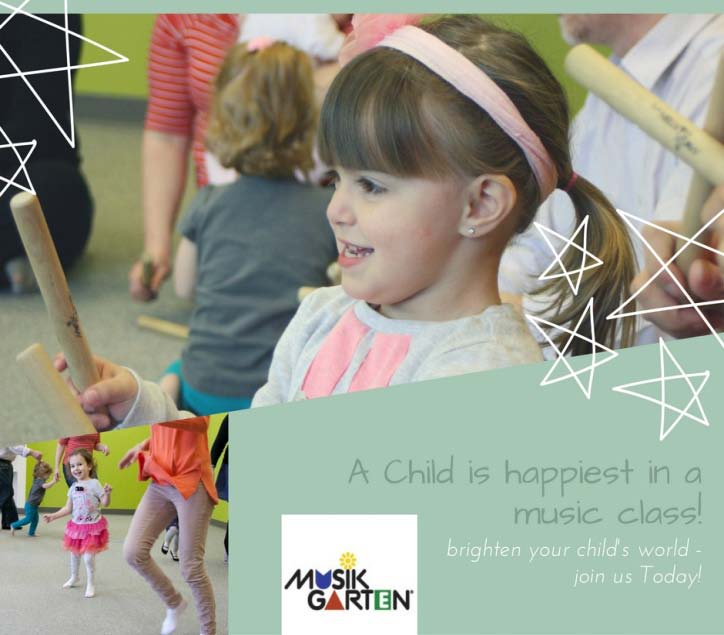
  3. Social Media: I do have a Facebook page for my business, but I follow many other Musikgarten studios that consistently update and advertise via Facebook and I have to admit that I suffer from Facebook envy. Check out The Music Garden, LLC. Keeping content updated is key. You can reference blog posts, promote your classes, share Musikgarten posts from their corporate page or from other sources, and create simple ads. Here is a sample of a quick ad I created for my Facebook page in less than 15 minutes; not perfect, but helps demonstrate what you can create in a small amount of time. An added bonus is that you can add a website link and email this to inquiries as a reminder to sign up for the fall, you can also post this to your Instagram and Twitter account and add it to a flyer with your contact information.
August2016adphoto (2)

  1. Demo Classes: As a veteran teacher I realize this was an important step early on, which brought me good exposure. I offered these classes in my studio and at my local libraries. It gave me a chance to practice my skills on the unsuspected. It also gave me a chance to hand out those nifty licensee brochures mentioned earlier.

For other ideas, check out this blog post from March 2015.

Please know it takes time and patience to bring families to your studio. Also remember that different communities require different combinations of tactics to reach your audience.

After you have chosen your tactics, how can you know which ones work best?  I have created an inquiry list that includes the question, “How did you hear about me”. Start collecting this data when the phone rings. This will give you the best barometer for the most effective tools in your marketing toolbox. Whatever tools you choose remember that you need to assess time and effort versus return.

Tell us how you have grown your Musikgarten studio!

Lazy Summer Days

The water is warm at the ocean; an August breeze rustles my hair as I sit relaxing at the ocean beach and pondering the upcoming fall music season. When I started teaching early-childhood music classes in 1992, not many people knew what “early-childhood music” really was, but things have certainly changed.  It is rare to find a child these days who has not had an early-childhood music experience, either in a pre-school or in a private studio setting.  This is wonderful news!  The earlier we reach children the more opportunity we have to help them reach their full music potential.

Thanks to a myriad of articles about the long term benefits of music in a child’s life, many who previously thought music to be a nice little “extra” are now clamoring to sign their children up for class to give them an edge on their SAT’s. On the one hand it is very gratifying to have the work of early-childhood music and movement teachers validated by scientific research. Seeing the value of music education highlighted in the media is truly exciting!  On the other hand, I find it rather sad that for many people in our society, music is only valued for its ability to improve a person’s math and science skills.

Music teachers have long known about the relationship between music and spatial awareness. We know that students involved in school music programs have better attendance records. We know that being involved in a music ensemble promotes social skills. While these are all good reasons for enrolling a child in a music program, they all point to the extrinsic value of music. What about the intrinsic value of music? What about music for music’s sake?

Imagine for a moment the Inauguration Day ceremonies without the Marine Band playing “Hail to the Chief”, or your child’s first birthday without the sounds of “Happy Birthday” being sung by your family, or a Christmas Eve church service without any Christmas carols. Music is a part of our lives and is an important part of the ceremonies that mark the milestones in our lives. It’s hard to imagine a wedding, a funeral, a graduation, a party, or a parade without music. Music is an essential aspect of our humanity that stimulates the imagination and nurtures the soul. Music is a source of joy and wonder and we all have the right to fulfill our musical potential. .

Our good friend, neuroscience educator Dr. Dee Coulter, says this about music and Musikgarten: “I would suggest that Musikgarten nourishes children in three ways: Their souls are nourished by the music itself, their bodies are nourished by the graceful movement, and their minds are nourished by the rhythm.”

All children are musical beings and are born with an aptitude for music. But that aptitude diminishes if it is not nurtured in the first nine years of life. By helping our children reach their full music potential we are helping them come into their own as well-rounded human beings.

The most valuable thing you can do for a young child is to keep him singing and moving.  Dr. Edwin E. Gordon, who was the leading researcher in early-childhood music and author of the most widely used music aptitude tests, states that a child’s music aptitude is in a developmental stage from birth to age nine. While a child can certainly learn musical skills such as fingerings, breathing, note reading, etc. after age nine, how musical a person he or she is –  how well attuned his or her sense of pitch and rhythm is – is set for life by age nine. Gordon divided music aptitude into tonal and rhythm aptitude and said the most effective means of nurturing a child’s tonal and rhythm aptitude is to provide them with a rich environment of singing and moving. What does this mean in terms appropriate early-childhood music and movement activities?  I believe there are four simple activities that should be kept in mind, whether you’re choosing a music program for your own child or integrating music activities into your daily plans:

  • singing simple songs
  • echoing tonal and rhythm patterns
  • moving in continuous and flowing movement activities
  • creating steady beat activities

Musikgarten programs do this in a weekly classroom setting. Musikgarten teachers choose the finest musical instruments they can get their hands on, ideally all made of natural material. Musikgarten incorporates a selection of music and movement activities drawn from the best of our cultural heritage. It was put together by master designers to be flexible and meet the needs of all young children and teachers.

My feet push into the sand as I watch children dig and create sand castles, happily humming to themselves and I envision all the activities we do in class that are based on large muscle movement – the root of all true learning experiences. The children follow the steps of musical fluency, intricately incorporated into my program and constructed to bring the children’s whole body into each music experience. Music flows from their toes to their vocal chords, movement and sound working together. It extends out from the mind to the tips of their fingers as they reach toward a keyboard or drum to play the music that they hear in their head.

A parent comes to help build and decorate the sand castle with their child. This parent/child relationship is integral to the development of the child.  Musikgarten classes provide families with a weekly parent/child time where you can rock, sing, clap, hug, roll, laugh and learn with your child. Every activity in class is an opportunity for you and your child to share a special moment that can be reproduced at home creating lasting memories.

I could sit alone on a solitary beach, yet I choose a spot in the middle of a lively beach crowd. Music class gives you and your child a choice to connect with your local community. Rather than watching music programs on T.V. or setting your child in front of a computer screen, you can make music among friends through song and dance.  Most importantly, by bringing your child to a weekly music class you say to your child that music is wonderful, it is shared with others, it is a valuable part of your every day experiences and it is a part of your daily family life. 

Now it is time to return to my studio and leave behind this summer beach day of reflection. I hope you will teach Musikgarten or find a Musikgarten music program that will fill your lives with music!

Instruments: In the Classroom and at Home

An essential part of a Musikgarten music class is playing simple instruments, like rhythm sticks, rattles, jingles, and drums. Children love to explore these instruments and I want to make sure I have a selection of the highest quality available for my students in the classroom. Since we, as the teachers, are models to the parents, parents often ask me, “What instruments should I have in my home for my children?” Parents value instruments that are not only fun to play but ones that will also last over time and make beautiful sounds. There are lots of instrument choices for parents to purchase on the internet but many of these choices are not appropriate for young children. If it looks like a toy, it is probably a toy.

When I create a list of instruments for parents to choose I consider:

  1. Instruments that have an excellent sound quality.
  2. Instruments that are made of natural materials.
  3. Instruments that are safe for children to handle.

In the classroom I mainly use instruments that Musikgarten offers, including their beautiful and simple drum. It has a wood frame, natural calf skin head, and is sturdy, but light weight. It is perfect to put on the floor and have the children play with their hands, but light enough to hold while standing.  I always make sure I have enough for everyone to have a drum.

IMG_0247crop

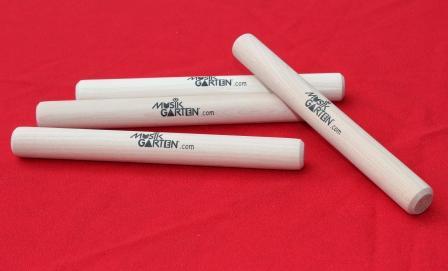
Musikgarten sticks are natural and have no varnish added to them so they can be mouthed by the babies and tapped by all the children.  These sticks need to be smooth and have no rough edges.  I like sticks that are small enough that they cannot become a ‘sword’ and heavy enough for hands to actively tap in various ways and roll on the floor.  Perhaps they may even become letters or houses.  I also have sticks with ridges so we can explore the sounds of insects, trains, rubbing or other imaginative sounds.

IMG_0265stick crop

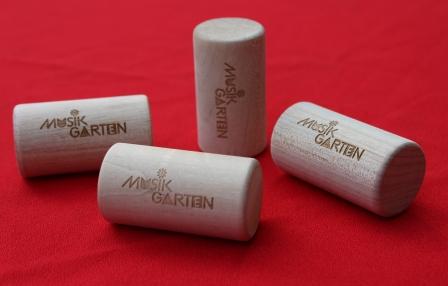
Musikgarten rattles are also made of wood and large enough so they cannot be swallowed by the youngest baby, but are small enough to feel comfortable in little hands.  With these cylinder shaped objects we can tap, pound, and roll and, yes, create towers to crash to the floor in a noisy heap.

IMG_0262rattle crop

A classroom can survive with only these instruments – great news for new teachers on a budget.  As the years have passed I have collected and adorned my studio with ethnic drums, band instruments my own children attempted to play while in school, bells found in antique shops and garage sales and other odd assortments perfect for a play-along time. These instruments are like flavor to a stew and can be used for a fun celebration at the end of class or at home.

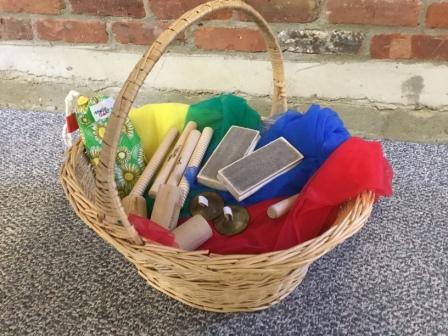
I have also found it very helpful to give parents some instruction on how to store the instruments. My favorite suggestion is to collect all those instruments and place them in a music area in your home. As families participate in the Baby and Family music program they receive a home instrument with each unit including a set of sticks, rattles, bells and sand blocks.  These can go into a basket which is separate from the toy box.  Add a music player that children are allowed to control, place the basket of instruments on the floor and you have music time!

IMG_0013basket resized

Then when your music time is over, place the basket OUT OF REACH of the children. Why?  I believe instruments should be treated differently from toys.  They are tools to create sounds and are taken out and put away when the activity is done.

Remember, for both your studio and when advising your parents, to keep it simple. Choose instruments that have a great sound quality, are made of natural materials, and are safe for children to handle. I advise staying away from plastic instruments and those 20 instruments in a set deals that you can find on the internet.  Homemade instruments can also be fun as long as they are safe for the children.

Eventually the question comes up from parents, “When should I purchase a piano for my child?” This is a blog article in itself, so stay tuned for the answer!


Musikgarten Recordings Make Classes More Successful!

Last week an enthusiastic father in my toddler music class announced to the class that his daughter learned to sing two new songs this week. While both songs (If I had a Hammer and Puff the Magic Dragon) are wonderful songs by themselves, I wondered why he wasn’t enthusiastically sharing how his daughter was singing two of her favorite songs from her class recording. So I asked the question every Musikgarten teacher fears asking,

“Have you downloaded (or listened) to your classroom music yet?”

As a teacher I bet you will cringe when you hear the myriad of excuses why parents haven’t gotten around to doing this simple and important act, and as a parent I bet you guiltily look for that code to download the songs onto your listening device or search for your CD.

Why would children and parents listening to the music at home be so important to the success of your program? Here are five important reasons to consider:

Familiarity breeds success: Children love to hear a song over and over and over again. They will request the music on every car trip. When they enter the classroom they embrace the activity because they KNOW the songs from listening to the recording at home.

Children singing on recordings: All Musikgarten recordings have children singing several of the songs, sometimes in a children’s choir and other times as a solo. This is magical for children because they love hearing other children sing. They can easily sing along because the vocal range is optimal for their voices.

Expands the classroom experience: So often I have parents share how their children are “practicing” their songs. This could be a baby or toddler singing the songs on a syllable like ba or bam in their crib or in their car seat. Or an older child singing a complete song while dancing.

Develops vocabulary: Songs, especially the folk material that Musikgarten uses, are rich in words. When children sing with the recording or later by themselves, they are developing their growing vocabulary.

Parent’s important role: Parents are the model the child will follow. I notice more parents sing in class when they have listened to the recording with their children or on their own.  How many times have I heard parents say they continue to listen and hum along to the music long after they drop off their children to school or other activities?  Parents love the music!

I always encourage families to listen to as many different types of music and I embrace the tremendous variety of musical choices in our society that we can access 24 hours a day. However, I want to emphasize the strengths of the Musikgarten recordings that are created specifically for young children:

Instrumentation is diverse: This is so important! So many children’s CDs limit their instrumentation to drums, guitar, piano and voice.  But take a look at a typical Musikgarten CD. The listener will experience a children’s choir; instruments from the woodwind family like the clarinet, oboe, and bassoon; large orchestras, brass instruments; folk instruments like bamboo flute and jaw’s harp; plus the traditional guitar, drums and piano. Oh, and did I mention an ensemble of Renaissance instruments? When it is time for a child to choose the instrument they wish to study, teacher and parent can be sure they have heard a wide selection of musical instruments before they make that lifelong choice.

Tempo: The tempo of the music is just right for children. I have found when I listen to CDs that are labeled for children they are just too fast. In my classes I am constantly slowing down the speed of the songs we sing to match the speed of the children singing.  At the same time, I want the tempos on the recordings to be lively and catchy and the CDs have the speed that is ideal for the children.

The singers are often children: This needs to be repeated! This means a child has a model of singing that is just like their voice. They hear a sound that they can easily understand and recreate.

Music includes activity: Remember in class we don’t just sing a song, we sing and MOVE to the song, whether it is tapping the beat on our knees, rocking to and fro, marching through the room, or playing along with sticks. This brings another dimension to the song, something a recording by itself cannot do.

Share these wonderful attributes about the Musikgarten recordings with your families. Encourage them to find these recordings and make them a part of their daily life.

This father has promised he will spend five minutes and download the music. I hope he will take advantage of this opportunity to share Musikgarten’s excellent music all week and all session long.

The Magic of Finger Plays

Finger plays are songs or stories that are acted out using your fingers and hands. As parents and teachers, we all want children to experience and play with as many finger plays in their early years because they “focus on the aspect of identification of fingers and hands and experimentation with their various movements.” In Musikgarten classes, finger plays are an essential and fun part of every toddler music class.

Over the years of teaching toddler music class I have learned that I must be well versed in the finger play to be able to share it with a group of children.  As I present the activity I realize I am also presenting it to parents in the hope they will continue to play and share this play at home.

So where do we begin?

Like many finger plays, the raw material for a parent or teacher is usually a ‘head scratching’  little poem:

Five little birds without any home,
Five little trees in a row,
Come build your nests in our branches tall,
We’ll rock you to and fro.

Not much to go on…….

A parent started a discussion about finger plays in class the other day.  She asked, “How do I do finger plays? Is there an online source to show me how?  When can I do them at home?”  I realized that finger plays were not a part of her early life. As a child I was surrounded by finger plays, learning and enjoying them with my parents, my siblings, my Sunday school teacher, etc.  Finger plays were part of my everyday world as a child. Is it possible we have lost the art of finger play in today’s home life?

As a teacher a finger play is an immensely powerful tool to draw in my children and their parents to a close knit circle.  From this intimate space we will share a moment that brings smiles and giggles mixed with hugs and rocking.  Always a good plan in a toddler music class!

The experts say a finger play:

  • develops vocabulary
  • creates a stronger emotional link between parent/teacher and child
  • develops the motor facility of the hand
  • develops cognitive areas of the brain
  • creates a safe place for children and adults to explore together
  • creates a safe place for physical contact between a parent/child or teacher/child
  • connects culture from generation to generation
  • goes beyond the purpose of nurturing, caressing, comforting or feeding.
  • creates laughter and excitement and pleasure.
  • creates a place where a child wants to repeat the game and play more and more.
  • turns a hand into a toy.

The finger play, summarizes Jelena Sitar Cvetko, is the “shortest and simultaneously the most comprehensive form of Folk literature. Finger plays are pre-dramatic forms with fingers as players and the hand as the stage, completed within itself and created within the play itself.” **

Good stuff in a little activity.  But still, the question still begs, HOW do I do a finger play?

So I have created a “before children walk into the room” video of the finger play “Five Little Birds”.

With no children in the room, it appears that all you need are the words and the fingers.  Notice the pace of the poem, the vocal tone used and the expressive quality of my fingers.  I believe a finger play needs to be rehearsed before your families walk in  because when children are added to the mix, anything can happen. You need to be ready to adapt in the moment.

Here is a video of another finger play with children and parents learning side by side.  It is quite different in that  you need to engage the toddlers and the parents. Luckily it helps that you are building on the common bond of love between parent and child:

When can a parent/grandparent/caretaker use a finger play?

  • during a diaper change
  • before bed
  • during a waiting time in a doctor’s office
  • during play time
  • whenever you need a connection or just want to laugh and giggle along with a child

Finger plays are fun and can create special moments throughout a child’s day.  For the teacher, it can make a major fun moment in a music class.  For the parent, it is a break from the necessary routines of a child’s life. Yet both parents and teachers still express apprehension when it is time to actually share the finger play.

Here are some clues to help:

  • Memorize the finger play but don’t worry if you mess up a word or two. It is more about the tone of voice, the pacing and loving way you transmit the play.
  • Repeat over and over. Children love to repeat and will gladly help and correct you if you don’t repeat it exactly the same way you did it yesterday.  Believe me, they remember EVERYTHING!
  • Exaggerate the underlying emotion of the finger play. Emotional response (laughing, crying, gasping) create significant memory cues for the children.

Watch how I emote in “Five Freckled Frogs” as the frogs “disappear into the pond” only to all return at the end.

Finally, some finger plays, like “Whoops! Johnny” can be changed to include the child’s name.  I add verses which include each of the children and then Mom, Dad, Grandma, Grandpa, sisters, brothers, and pets. I had a mother say her child would go through everybody in her world before going to bed at night.  The list was quite long and she would diligently repeat all the loving people in her repeats.  And, yes, I was included!

I hope you will make finger plays a part of your repertoire as a teacher and as a parent/grandparent/caretaker. Use these whenever possible.  This magical moment will make a difference in your life as well as the child playing with you.

What could be better?

**Quote from the Paper of Jelena Sitar Cvetco, The value of Finger play as a form of Cultural Heritage in the Curriculum of the First Age Period: https://hrcak.srce.hr/file/222654

The Teaching Triangle

As a young piano teacher, I was taught that the most successful recipe for learning to play the piano was to encourage the triangle of support from student to teacher, teacher to parent, and parent to student.  When any of these sides become weak, the process becomes more difficult for all.  Then reality set in. I faced a problem many piano teachers lament.  The parent would drop off their student, hopefully on time, and later pick up their student, hopefully on time, but their involvement ended there.  Even though the child received a weekly written homework assignment of what to practice at home, more than likely the only one benefitting from this paper was a hungry dog.  I was entertained with threats indirectly aimed at me as the exasperated parent would lecture the sullen child, “If you don’t practice the piano, I am not going to invest any more money for lessons”.   Unlike an orchestral triangle, my triangle was thudding, not dinging.

TriangleWeb version

Adding Musikgarten classes to my piano studio makes this triangle so much more fun to manage.  By bringing families into my studio to share music with me, I could now direct appropriate music making. Families receive a marvelous CD, or digital download, of music for them to sing and dance with all week. Ultimately I form a lasting relationship starting in my early childhood classes and moving through the program and beyond into my private piano program.

In a Musikgarten class, a community is sharing music and magic is in the air.  Below are some of the benefits from each perspective of the musical triangle:


Teacher:

  • Gets to know the whole family in the music class setting.
  • Becomes familiar and can work with their high/low and out of tune voices, and can adapt the program to work with the laid back family or the families that giggle and jiggle along.
  • Long term relationships are formed in a Musikgarten class and the triangle is strengthened. This musical relationship can go on for nine years in the Musikgarten curriculum and beyond in traditional lessons. When that student finally graduates from high school and adds music to their college course load all can shed tears of congratulations.
  • Gets to share something once to a group rather than 8 times to individual lessons. And the punch of the content is much more effective in the group.  No more telling a student who may or may not tell the parent.

Parent:

  • Receives firsthand experience of what is happening when their child is learning music.
  • Learns alongside their child and may even relearn what they were taught as a child.
  • Receives a quality recording and doesn’t have to entertain their child with solo performance of singing.
  • Know they have made a sound musical choice for their child that will go well beyond the early childhood years and gracefully bridge their children on to formal lessons.

And Students?

  • LOVE having their parents and siblings alongside as they share music.
  • Know they can share this music at home and the family will be familiar with the songs and dances.
  • Can dance, sing, and play musical instruments along with their friends.
  • Freely fall in love with their music teacher, can dream of learning to play an instrument and get to share music throughout their whole lives (although they don’t know about this surprise yet!)

Teacher-kids low resThere are so few experiences in our culture wherewe get to really know the teacher the way a Musikgarten class can provide this access.

If you are a teacher, I hope you add these ideas to your list of talking points. If you are a parent, I hope you will see the lifelong benefits of Musikgarten

And if you have, share the benefits you have enjoyed.

Confessions of a Piano Teacher

It’s a new year and a new beginning for our blogger, Ellen Johansen.  She will be adding her insights, tips and suggestions each month.  But first let us introduce her:

ImageCompressed

My name is Ellen Johansen and I have a passion for teaching music to young children.  It is my belief that music is one of the most valuable gifts we can share with others; the kind of gift where both the receiver and the giver benefit.  Being a Musikgarten teacher, I get to facilitate and develop this gift of music with children and their parents with the hope that they will continue music in their family lives and in their future.

I began teaching piano when I was 16 and I am reluctant to talk about it 🙂

I had no idea what I was doing but I did discover that teaching music was fascinating.  In my twenties after studying the art of piano pedagogy in college, teaching became an important source of income. I drove from home to home, sometimes wondering if I was teaching music or providing an expensive babysitting service.

As I developed my home studio and continued to study piano pedagogy, an annoying and enduring question rose, “How do children really learn to read music?” I scrambled to collect every possible method book, theory and ear training workbooks thinking they would somehow answer this basic question. Yet there seemed to be a disconnection from the printed pages of these books to the sound I wished for my students to learn. The joy I wanted them to experience with discovering and creating a musical sound was missing.

Why were my students so squirmy on the bench? They seemed un-interested in my attempts to help them see a half step compared to a whole step.  Even though they could name those dots on the page with letter names, why did they seemed no closer to reading music fluently?  I found myself blaming it on not enough daily practice.  Or maybe I wasn’t following the method books correctly. The children coming for piano lessons could not sing in tune or keep a steady beat. This concerned me greatly.

As I began to raise my own family I recalled all the hours I spent singing with my own family as I was growing up. My Great grandfather was an organ builder, my grandmother was a piano teacher during the depression and my mother and her sisters learned to play the piano and sing.  Music was part of my every day as a young child. My mother played the piano and sang every night as I fell asleep and my siblings sang songs and played all sorts of musical games children like to sing and play.  We sang and played in the car, we sang and played around the house, we sang at campfires on the beach, we sang in school and at scout meetings, we sang weekly in church and in Sunday school, and we sang and played with our neighborhood friends in the backyard.  But the children walking into my studio were growing up in a different culture, where music was performed on the radio or TV and children attended playdates instead of knocking on a neighbor’s door.

Then I found an ad about teaching early childhood music and movement classes in my studio.  Maybe this source could help me answer this question.  I met Lorna Heyge and everything changed.

I completed every training session offered in early childhood music, and then I taught as many classes as I could book in my music studio. It has now been over 20 years that I have taught the Musikgarten curriculum and this wonderful teacher’s resource has been the ongoing wellsping of appropriate and passionate sequential musical activities that lead the children in my classes towards musical literacy.  But it wasn’t without many missteps and musical mishaps before learning how to incorporate this aural and joyful approach to my classroom.

Today I run a successful, independent music studio on the East End of Long Island and offer all levels of the Musikgarten program, from toddlers through keyboard classes. Most of my Musikgarten graduates continue into piano studies.  I now have the experience of witnessing many of my Musikgarten graduates go on to study other instruments as well as composition. They enter college with music in their hearts and as part of their course load.  One student of mine, who started in a toddler music class, is graduating from High School this year and will be giving a concert of piano music including Debussy’s Arabesque and Gershwin’s Preludes.  He is a great example of the Musikgarten graduate who is the literate musician I always dreamed of teaching; he thinks and plays musically, can hear what he sees and sees what he hears.  It all started with that first question: “How do children really learn to read music?”

I hope my experience and insights into this marvelous curriculum will help you find your answers to your teaching questions.

Shore Up Your Enrollment All Summer Long!

Summertime means hot, sunny days and chillin’ by pool, but for some Musikgarten studios it can also mean a not so cool dip in enrollment and attendance. Here are 11 HOT ways to keep your studio humming all summer long…

  1. Talk to parents about their summer plans so you can better anticipate your summer enrollment and plan accordingly. Ask parents if/when they’ll attend during the summer, why or why not, and when they’re away on vacation. You can create a simple, free survey using Google Forms or SurveyMonkey, and send it to parents via email.Happy children on a green meadow.
  1. Start sending emails or notes home now to remind parents that Musikgarten is just as fun in the sun! Let them know now if you’re planning an alternate summer schedule so they don’t miss a beat.
  1. Talk to parents about summer learning loss and how participating in Musikgarten provides an enriching learning experience. You already know music instruction boosts academic performance; this article recommends enriching, less-structured activities as one way to help keep kids’ minds sharp all summer. Consider this from the National Summer Learning Association: “When school closes for the summer, what do kids face? For some, it’s a world of interesting vacations, music lessons, and library trips. For others without these enriching summertime opportunities, the break can lead to serious academic consequences—and the disparity can be dramatic.”
  1. Consider adding a few extra daytime classes for parents, sitters, and summer camps looking for ways to keep little ones busy. They’ll thank you!
  1. Reach out ASAP to nearby camps and churches, YMCAs, and day care centers offering summer programs. Camp directors are always looking for local, affordable activities; they may bring you new students by the busload! If space is an issue at your studio, take your Musikgarten to the camp and be sure to supply take-home information.
  1. Offer summer specials and limited-time promotions. Consider an exclusive summertime rate for current families to encourage them to stick with your studio all season.
  2. Consider adding a flexible, drop-in class for parents and sitters battling boredom and rainy day blues – your studio can be a real sanity saver!
  1. Spring and summer means lots of family-friendly outdoor events and festivals popping up in every town. Check with your local paper, convention and visitors bureau, or city website for a calendar of upcoming events. Then contact the organizers about hosting free, interactive music activities for kids; be sure to bring flyers or cards for parents!
  1. If you have the space and resources, consider offering a half- or whole-day Musikgarten camp. Musikgarten curriculum can be one part of the daily schedule; you can fill the rest of the time with music-themed arts n’ crafts, games, activities, and even movies. Here’s a list of age-appropriate musicals and musical movies.
  1. Don’t stop marketing your Musikgarten! It can be temping to take a break, but keep up your marketing and social media efforts: a new summer student may turn into a year-round enrollee! Need new marketing ideas? Click here!

11.  Go outside! Plan aChildren playing in the parknd promote a few classes “al fresco” – have parents meet you at a local park or under a shady tree near your studio (of course, get permission if it’s not your property.) Ask families to bring picnic blankets or beach towels, and water bottles. Encourage children to listen to the music of nature, like birds singing and leaves blowing in the breeze. You can even have an impromptu summer parade!

Are you ready for summer? We are! Tell us how you keep your Musikgarten growing all summer; email us here.

21 Reasons Everyone Is Going to Sommerfest 21!

At a Musikgarten Festival there are high-quality, rewarding workshops taught by master teachers. Beloved music activities come to life.  You will learn to give new creativity, shine and refinement to the Musikgarten activities, songs, and dances you teach. – Amy Abbott Pappageorge, Owner, Musikgarten Oak Park.

Do you remember your 21st birthday? The excitement, meeting up with friends, the fun, and the memories! Well, Musikgarten turns 21 this year and the FESTIVAL is planned! Are you in?

Here are 21 reasons to book your trip to Sommerfest 21!

1. Our founder, Dr. Lorna Heyge, will reflect on the past and share her vision for the future of Musikgarten: “Turning 21 is a big event in our lives. It’s a turning point. I want everyone to be mindful of all we have accomplished in the past but also feel a sense of excitement and promise as we look toward the future!” – Lorna Heyge, Founder of Musikgarten

2. You’ll learn the art of Communicating the Neurology of Music Effectively, presented by Dr. Dee Joy Coulter, Neuro-Science Educator. Amy Abbott Pappageorge, owner of Musikgarten of Oak Park, is especially excited about this, “Dee Coulter’s presence promises to be galvanizing with regards to gaining richer understandings of the neuroscience of music.”

3. Musikgarten Teacher Trainers will tackle hot topics requested by teachers, such as…

4. Vocal Development Through the Curriculum, and…

5. Parents as Partners, and…

6. Nuts and Bolts Sessions covering many curricula, plus…

7. Your Business – Build it for Lasting Success

8. More speakers and general interest sessions offer something for everyone including Family Music for Toddlers, Cycle of Seasons, and all levels of Music Makers.

9. Veteran teachers will share timeless wisdom and tried-and-true instructional methods.

10. New teachers will show how they’re successfully growing their studios.

11. You’ll connect with other Musikgarten teachers who share the same challenges and joys. Merrill Marshall, owner of Merrill’s Musikgarten told us, The best part is being with so many other kindred spirits, teachers who do exactly what you do, and to connect and learn from each other.”

12. You’ll feel inspired and re-energized with ideas you can use right away. “I was overwhelmingly pleased with the whole Festival weekend. It was not only the opportunity to attend talks about different teaching techniques and ideas, but also an amazing place to sit down with other teachers and gain insight on everything from classroom management to pricing structures, scheduling classes, and online marketing. Every time I attend, I have more information than I can hope to use in the coming year!” shared Betha Christopher, owner of Betha’s Musik.

13. We’ll tackle your trickiest questions, from how to teach a tough dance to dealing with difficult parents.

14 You’ll learn new business-building marketing and networking ideas to grow your studio.

15. You’ll sing. You’ll dance. You’ll play. You’ll laugh.

16. You’ll reconnect with old friends, meet new friends, and make lasting memories.

17. You’ll return home refocused, refreshed, and ready to go-go-go! Says Amy Abbott Pappageorge, I never stop reaping the benefits of each and every festival I attend. The festival always exceeds my expectations; incredible learning and enjoyment abounds. I return to my studio with new vigor and commitment.”

18. The date, August 21-23, 2015, is perfect timing for a back-to-school sign-up season recharge.

19. It’s in Charlotte, North Carolina, conveniently located at the DoubleTree by Hilton Charlotte Airport.

20. It’s affordable! Your fee is just $135. Shuttle service to and from the airport and hotel parking are free.

21. We only turn 21 once!

Sommerfest 21 is on! Are you in?

Click here for details or call 1.800.216.6864 to RSVP now. Don’t delay! Hotel rooms must be booked by July 22!  

**Extra-special thanks to Dr. Lorna Heyge, Betha Christopher, Merrill Marshall, and Amy Abbott Pappageorge for sharing their experiences and contributing to this article.**

Tell us about your experience at past Musikgarten Festivals → Share now!

Going On In The Musikgarten

Click the red links below to learn more about upcoming events, webinars, and continuing education training workshops.

  • Training Sessions
  • Musikgarten Coaching Live!
  • Meet Musikgarten! – Interested in becoming a Musikgarten Teacher? Awesome! Attend this FREE session with Jill Hannagan, Executive Vice President of Musikgarten, veteran Musikgarten teacher and studio owner, Teacher Trainer, and coauthor of the Music Makers: At the Keyboard Series.

IMPORTANT REMINDER: Never miss a single note! Click here to receive your FREE In The Musikgarten e-newsletter (If you don’t already get it. Check your SPAM folder.)

How Does Your Musikgarten Grow? 11 Ways to Market Your Musikgarten.

March 15, 2015

In Rick Townsend’s ECMMA.org series, Dr. Lorna Heyge: Growth of a Vision, we learn how in the early 1970’s, “…Building an early childhood music studio was different. (Lorna) simply sent a note to the newspapers that it was going to start, and the phone rang off the hook.”

Wouldn’t it be great if it were still that easy? A note to a local newspaper may have been enough to spark interest among families in 1974, but promoting your Musikgarten studio to busy families in today’s hectic, digital, distraction-filled world isn’t quite as simple!

Like most of us, you probably became a Musikgarten teacher because you love music, not marketing. But let’s face it, Musikgarten isn’t the only option for families, so marketing is a must if you plan to grow your studio. Here are 11 Ways to Market Your Musikgarten – no MBA or million-dollar marketing budget required! Be sure to click on the red links for more information and teacher resources.

  1. Order Up! – The New Musikgarten Parent Brochures are here! Updated with fresh new copy and images, it’s been getting rave reviews from teachers and parents.
  1. Log In! – To the Musikgarten Teacher Portal. We offer a variety of free and affordable professional marketing materials including colorful brochures, flyers, postcards, signs, emails, a personalized website, and customizable co-op advertising. So easy!
  1. Get Social (Step 1) – Time to get serious about social media. It’s free, and it’s a great way to show what your studio is all about. Start a Facebook page for your studio; if you use Facebook, consider adding Twitter or Instagram. Need a reason why? Your audience is using social media: 65% of Moms learn about products and services through social media and 89% of moms use their smartphone to check social media. Also, moms with kids under 5 are more active than any other consumer group on social media.

Not sure where to begin? There are plenty of resources like this one, this one, and this one. Not sure what to say? Follow Musikgarten on Facebook and Twitter, sign up for e-newsletters, and read our monthly blog for plenty of content you can simply share.

  1. Get Social (Step 2) – Once you’ve set up your social media pages, start inviting parents to the party! Share links in emails, mention it during class, and encourage parents to follow. To keep parents engaged, post interesting, relevant content at least a few times a week such as studio schedules, photos and videos from your classes, coupons and contests, relevant news articles and local music events, and fun activities families can use at home. Get inspired at Hunterdon Academy of the Arts, Musikgarten By The Beach and Sound Beginnings Musikgarten.
  1. Launch Your Website – Musikgarten offers a special website program to our licensed teachers through Helios Webhosting. For only $14.95 per month, Helios will launch and help you maintain a website that is complementary in look to the Musikgarten corporate website complete with class descriptions, scheduling grid, pictures, and a coupon for free preview classes. The website can be customized and comes with top-notch tech support. Contact us to learn more.
  1. Be Inviting – Offer parents plenty of ways to sample a live class and turn “warm leads” into “hot prospects.” If a parent expresses interest—via a call, an email, or in response to an ad or social media—invite them to participate in an existing class or open-house night for free. If you don’t relish the idea of drop-ins, schedule a weekly “demo class.” Fill it up by offering it free to friends and neighbors, and make this the one class where prospects are always welcome to drop in to sample the fun!
  1. Maximize Word-of-Mouth – Happy customers are the best marketing your money can buy! Create a referral program or a “Share The Music” monthly promotion: encourage families to bring a friend for a free class. Snap and share photos with the family to show them how much fun their child had in your class.
  1. Get Outside! –As the weather warms up, community calendars fill up with family festivals, fairs and outdoor music events. Check with your local chamber of commerce and community events websites to find opportunities for local businesses and to learn how you can sponsor a free music class during these family-filled events. Bring plenty of brochures, flyers, postcards, and business cards, and invite folks to attend your regularly scheduled free demo class!
  1. Advertise – Either online or in print with your local parent magazine or weekly paper. To find out if your area has one, just Google your city, county or region with the words “parent magazine” or “family magazine.” You can find downloadable ad templates on the teacher portal.
  1. Email Marketing – Use email to stay in touch with current customers and to send news they can share. Encourage new website visitors to sign up for your emails or newsletter by offering a coupon, free class or chance to win a prize. Start your email campaigns with a free email marketing service like MailChimp.

Bonus Idea! Make Strategic Partners – Connect with other local businesses and organizations that also cater to families, such as tutoring services, restaurants, birthday party venues, libraries, and children’s museums. Invite leaders to an informal gathering to brainstorm ways you can work together to reach more parents in your community. It may be as simple as swapping stacks of business cards and flyers to hand out at your individual locations, or you may come up with more creative ways to collaborate and co-promote each others’ businesses.

Tell us how you’ve grown your Musikgarten into a blooming success. We may share your idea in an upcoming newsletter, blog or on Facebook and Twitter. Share now!

Going On In The Musikgarten – Find links to upcoming events, webinars and continuing education training workshops you need to be the very best Musikgarten teacher.

Last reminder! Sign up for the In The Musikgarten monthly e-newsletter if you don’t already receive it.